
Two dates decide more about your credit card bonus taxable status than anything printed in the card’s terms. One is the day you started counting as a U.S. tax resident. The other is the day the bonus actually posted. Arrive on a work visa and open a card in your first year here, and you’re likely filing dual status. That means a nonresident alien for part of the year, and a resident alien for the rest. The ordinary “is a credit card bonus taxable” rule still applies either way. But it can land on a different form, depending on which side of that residency line the bonus falls on.
Most articles on this topic assume you’ve been a full-year U.S. taxpayer your whole life. First-year filers usually aren’t. There’s also a more basic problem underneath the tax question. Plenty of brand-new arrivals can’t even qualify for a bonus-worthy card yet.
Is a Credit Card Bonus Taxable? The Rebate-vs-Income Split
The underlying rule hasn’t changed. It applies the same way to every filer, regardless of immigration status. Whether a credit card bonus is taxable depends on one thing: did you have to spend money to get it?
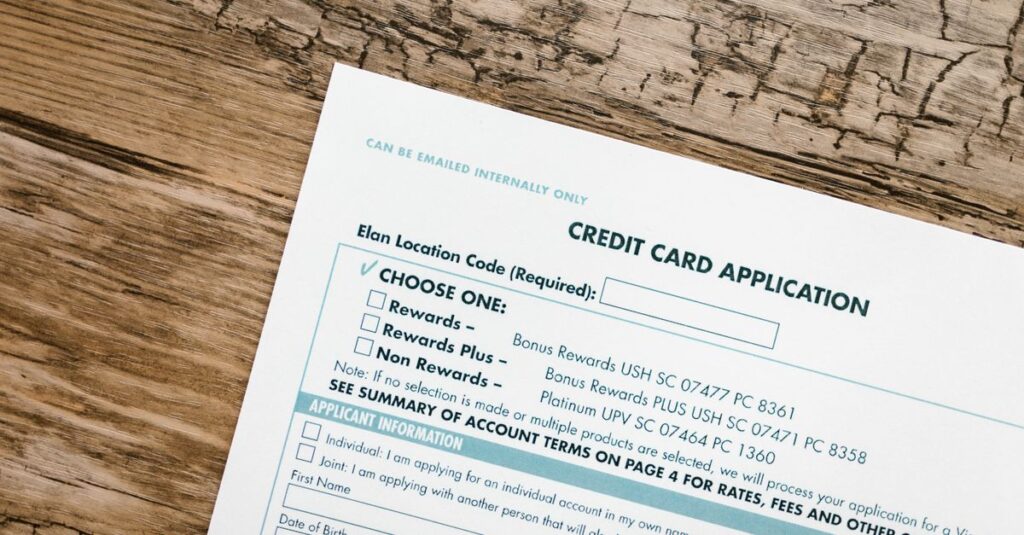
Take a card that pays points or cash for hitting a spending threshold. Spend $4,000 in the first three months, for example, and earn 60,000 points. The IRS treats that as a rebate on your own purchases, not income. You spent $4,000 and effectively paid less for it. This has been the IRS’s position since a 2002 internal memo. It said the agency would not pursue tax on card rewards tied to purchases. Nothing about being a nonresident alien for part of the year changes that logic. A rebate is a rebate whether you file a Form 1040, a Form 1040-NR, or both in the same year.
The rule flips once no spending is required. A bank might pay you $300 to open an account. A card issuer might pay $100 for referring a friend. Either way, that’s payment for an action, not a discount on a purchase. That’s compensation, and compensation is income.
A quick filter: if you can point to a purchase requirement, it’s probably a non-taxable rebate. If the payout arrived because you opened something or referred someone, it’s income. That holds true no matter which stretch of your first year it landed in.
Referral and Account-Opening Bonuses: Is a Credit Card Bonus Taxable the Same Way?
Referral payouts and bank account bonuses are taxable from the first dollar. The IRS usually has a paper trail on them, independent of what you report.
Referral bonuses trigger a 1099-MISC once a single payer’s referral income to you reaches $600 in a calendar year. Bank account bonuses trigger a 1099-INT (occasionally a 1099-MISC) once the bonus plus any interest hits just $10. That gap in thresholds means almost every bank bonus generates a form, while smaller referral payouts often don’t. But the $600 line only controls when a form gets sent — not whether the income is taxable. $350 from one bank and $300 from another, with no 1099 from either, is still $650 you owe tax on.
Points get valued at the issuer’s cash redemption rate for tax purposes — typically 1 cent per point. A 50,000-point referral bonus, then, is $500 in reportable income. That’s true regardless of what those points would be worth through a premium travel redemption. At a 22% marginal rate, that’s roughly $110 in federal tax on money most people mentally file as “free.”
What Dual-Status Filing Adds to the Credit Card Bonus Taxable Question
Here’s where a first-year U.S. tax return works differently than the version most credit card tax articles assume.
Arrive on an H-1B, or most other work visas, partway through the year, and you likely file dual status. You’re a nonresident alien for the stretch before you meet the Substantial Presence Test. From that point forward, you’re a resident alien. We’ve covered the mechanics of dual status, and the alternative First Year Choice election, in our H-1B first-year tax guide. The short version: nonresident aliens are taxed only on U.S.-source and effectively connected income. Resident aliens, by contrast, are taxed on worldwide income. Your first year splits across both rules on a single return.
That split matters here because it raises a question a full-year taxpayer never has to ask. Which portion of the year does a given bonus belong to — and does that change anything?
For the rebate-type bonus, the answer is no. The “spending requirement means no tax” logic isn’t a resident-only benefit. It applies the same way, regardless of which side of your residency start date the bonus posts on.
For the taxable kind — referral payouts, account-opening bonuses — the source of the payment is what matters. Your residency status when you received it doesn’t change that. A referral bonus paid by a U.S. bank is U.S.-source income, and nonresident aliens are taxed on U.S.-source income too. Being classified as a nonresident alien for part of the year doesn’t exempt a U.S. institution’s payout to you. It mainly determines which form — 1040-NR or 1040 — that income belongs on.
Does It Matter If the Bonus Posts Before or After Your Residency Start Date?
Take Hyun-woo, who lands on his H-1B on May 1, 2025, arriving directly from Seoul with no earlier U.S. presence. Under the Substantial Presence Test, he’s a nonresident alien from January 1 to April 30, 2025. He becomes a resident alien on May 1, and stays one for the rest of that year.
His SSN arrives in early June. A couple of months of U.S. address and phone history later, by late July, he’s approved for a starter card. It carries a $200 bonus for $1,000 in spending within 90 days. He clears the spending in September, and the bonus posts in October 2025 — well inside his resident-alien period. Because it’s spending-triggered, it’s a rebate either way. There’s nothing to report, and the residency line never actually comes into play. He had no way to be in the country, let alone hold a U.S. card, during his nonresident-alien months anyway.
That’s the ordinary case. For most brand-new arrivals, the nonresident-alien stretch of the year is a non-event for credit card bonuses. They simply weren’t present yet to earn one.
The Exception: A Bonus From Before Your Residency Start Date
The exception is anyone with U.S. history before this visa — a prior internship, an earlier work stint, graduate study. Maybe they still have a U.S. bank account open from that time. Say a $150 referral bonus posts from that older account in February, before this year’s residency start date even begins. The amount owed doesn’t change. What changes is which return captures it. Income received during the nonresident-alien stretch belongs on the 1040-NR portion of the dual-status filing, not the 1040. The real risk isn’t under-reporting — it’s reporting a U.S.-source bonus on the wrong half of a dual-status return.
One detail worth raising with your preparer: nonresident aliens generally don’t owe tax on interest from U.S. bank deposits. That’s under IRC Section 871(i) of the tax code. It’s part of why foreign students can hold U.S. savings accounts without a tax bill on the interest. Some bank account bonuses get reported on a 1099-INT rather than a 1099-MISC. Does that deposit-interest exemption cover a bonus paid for opening the account, rather than interest earned on money already there? That’s unclear. It isn’t something a blog post should settle for you. If your bank bonus arrives on a 1099-INT during your nonresident-alien months, that question is worth asking directly. It only comes up in a dual-status year.
Before the Tax Question Even Applies: Building a Credit File From Zero
There’s a more basic sequencing problem underneath all of this. Most people who just arrived can’t get approved for a bonus-worthy card yet, regardless of what the tax rules say.
Someone landing on a work visa typically has no U.S. credit history. A credit file doesn’t transfer across borders, so the major bureaus have nothing to score yet. That thin-or-no-file status generally rules out the premium travel cards with $500-plus bonuses. Those products tend to want an established score and file length that a brand-new arrival doesn’t have yet.
A realistic sequence looks more like this:
- First few weeks: SSN issued for the visa holder, or ITIN application started for a dependent spouse without work authorization. No credit file yet.
- Roughly months 1–3: A secured card, or one of the newer no-history options some issuers now offer, opens a thin file.
- Roughly months 4–9: On-time payments build a usable score — usually enough to qualify for a mid-tier rewards card.
- Month 6 and beyond: The larger bonuses tend to become realistic once the file has length and a couple of trade lines behind it.
That timeline overlaps almost exactly with the resident-alien portion of a first-year dual-status return. That’s one more reason the nonresident-alien stretch rarely has a bonus in it worth worrying about.
Questions Worth Asking
Is a Credit Card Bonus Taxable Under a Different 1099 Threshold If I’m Filing Dual Status?
No. A 1099-MISC kicks in at $600 in referral income from one payer. A 1099-INT kicks in at $10 in bonus plus interest from one bank. Those thresholds are the same for every filer, regardless of residency status. What changes is which of your two return forms — 1040 or 1040-NR — reports that income. That depends on when you received it, relative to your residency start date.
Should I hold off on chasing credit card bonuses until I’m a full-year resident?
Not for tax reasons — the rules apply the same way in a dual-status year. The real constraint is usually your credit file, not your residency status. If you already qualify for a decent card, the bonus’s tax treatment doesn’t change. That’s true even partway through your first year.
My spouse is on a dependent visa with no SSN yet. Do bonuses even apply to them?
Not until they have an SSN or ITIN and can open a card in their own name. Adding a spouse as an authorized user on an existing card can help build their credit history in the meantime. But authorized-user status generally doesn’t make someone eligible for their own signup bonus.
Treat this as a starting point, not a final answer. Tax and immigration law changes, and your specific facts matter. Confirm anything important with a qualified professional before acting on it.